
Build your ranking from the live game
A rarity tier list is useful only when it names this exact place and current build. Rarity is part of this gameplay family, but the current names, order, spawn rules, hatch tables, and odds are not confirmed for this server.
You can still rank eggs usefully. Record the label displayed in game, the pet produced, the pet’s visible economic value, and the difficulty of completing the return. That gives you a current, practical list instead of a borrowed chart.
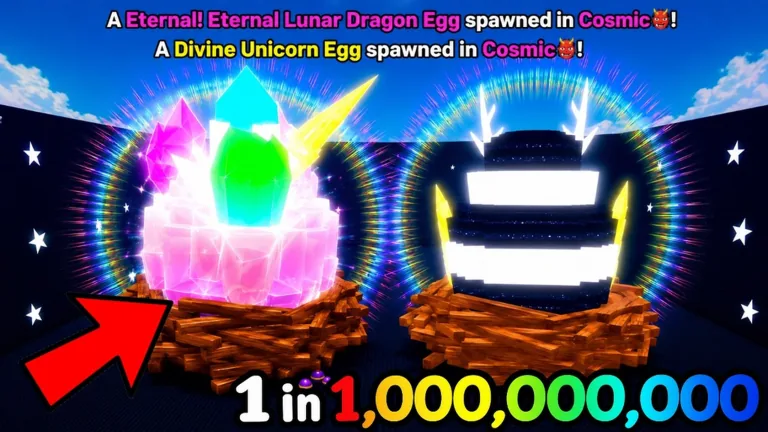
Separate rarity from practical value
Rarity describes scarcity or collection status; it does not automatically tell you which target is best for your next run. A rare egg with an unreliable return can be worse for progression than a common egg you deliver consistently. A striking visual effect also does not prove a specific hatch chance or income multiplier.
Judge the egg in three different ways:
| Judgment | What it answers | What to inspect |
|---|---|---|
| Collection rarity | How the current game classifies the egg or pet | Exact label, color key, index position |
| Economic value | How much the resulting active pet contributes | Current pet card and money display |
| Route value | Whether you can secure the egg consistently | Distance, traffic, turns, current movement readiness |
Keeping these judgments separate prevents a rare label from overriding a bad route decision.
Record the exact labels first
Start with the rarity text shown by the current server. Capitalization and color can help identification, but write down the words rather than inventing tier names from visual style. If the game has an index, collection book, pet card, or hatch reveal, use the label repeated across those interfaces.
For each confirmed rarity, record:
- the exact in-game name;
- where the label appears;
- one egg or pet carrying that label;
- the date you checked it;
- whether the label belongs to the egg, the pet, or both.
Do not fill missing levels to create a neat ladder. A four-tier list observed directly is more useful than a seven-tier list padded with familiar Roblox terms.
Test the egg-to-pet relationship
An egg’s appearance or label may not map cleanly to one pet result. To learn the current relationship, follow complete hatches and compare the egg state with the revealed pet state. Change only one question at a time.
- Return an egg whose label you can read.
- Capture or write down that exact label.
- Hatch it using the current interface.
- Record the pet name and any displayed rarity.
- Compare the pet’s visible income or active value.
- Repeat before treating the result as a fixed table.
One hatch proves what happened once; it does not establish an odds percentage. Publishing precise chances requires a large, controlled sample or a current developer statement, neither of which is publicly confirmed for this universe.
Compare targets with a decision scorecard
When choosing between eggs, use a scorecard that reflects your actual session:
| Question | Low-risk answer | High-risk answer |
|---|---|---|
| Can I identify the route home? | Every turn has a known landmark | The path has unfamiliar branches |
| Can I finish the route reliably? | Repeated returns feel controlled | Previous attempts barely succeeded |
| Is the target contested? | No player is committing to it | Several players are circling it |
| Do I need this rarity for collection? | It fills a known missing entry | The label is only a guess |
| Will the result improve my lineup? | The live display supports an upgrade | Value is based only on appearance |
This does not reduce rarity to a single number. It makes the tradeoff visible. A collector may accept more route risk for a confirmed missing entry, while a new player should favor stable income.
Handle size and mutations separately
Rarity, size, and mutations are different collection axes in the wider gameplay family. A large egg is not automatically a higher rarity, and a visual variant should not be renamed as a mutation unless the current UI says so.
When several features appear together, record them in separate fields:
- Record the exact rarity tier or label shown.
- Note the displayed size category or a clearly comparable physical variant.
- Copy the mutation name shown on the egg or pet.
- Write down the measurable output displayed for an active pet.
This avoids circular rankings such as calling a pet rare because it is large and calling it valuable because it looks rare.
Keep a small current rarity log
A useful personal log needs only a few columns: check date, egg name, egg rarity label, pet result, pet rarity label, displayed output, and route notes. Update an entry when the server changes rather than erasing the old observation.
The check date matters because modified Roblox experiences can change without a detailed public changelog. A list that was correct last week can become incomplete after a server update. Before making a high-risk run based on your log, confirm that the live labels still match.
Mistakes that create bad tier lists
- Copying rarity names from a related experience.
- Treating egg color as an official tier label.
- Converting a few hatches into exact odds.
- Ranking by rarity without comparing active pet value.
- Mixing size, mutation, and rarity into one unsupported label.
- Omitting the date and exact place from a published list.
The slower approach works: record only what the current interface shows, keep collection value separate from route value, and update the list when the game changes.
FAQ
What are the SAEM with F2P ADMIN PANEL egg rarities?
The current rarity names and order are not publicly confirmed. Read the exact labels in the live collection, egg, or pet interface and record them with a check date.
Does a rarer egg always give the best pet?
Do not assume so from the label alone. Compare the hatched pet’s current displayed value and active contribution to your existing lineup.
Can egg color reveal rarity?
Color can help you recognize an egg, but it is not an official rarity unless the current interface links that color to a named tier.
What are the exact hatch odds?
No exact odds are confirmed for this universe. A small number of hatches cannot support a precise percentage.
Are size and mutation the same as rarity?
No. Treat rarity, size, and mutation as separate labels or traits, then compare their measurable effects through the current game display.